
Consumption Forecasting: How to do it
Last updated on Wednesday, May 1, 2024
For SaaS companies, consumption-based pricing or usage-based pricing has emerged as a strategy to align costs with consumption, providing transparency and flexibility to customers and better visibility to businesses. The pay-as-you-go pricing strategy involves customers paying only for the services or products they consume. This approach allows for billing to adjust periodically, reflecting the actual usage, offering a more adaptable and cost-effective solution for both consumers and providers.
Under this consumption model, companies are able to bill clients based on their genuine use of goods or services, offering a billing solution that is more precise than traditional fixed or per-user pricing schemes. This method not only facilitates more efficient billing and simpler invoices but also yields insights into how consumption patterns evolve over time, enhancing usage predictions.
Adopting a usage-based pricing model enables businesses to expand their potential market, elevate customer satisfaction levels, and reduce customer turnover. It proves especially advantageous during times of fluctuating demand, catering to customers’ desire to pay in alignment with their actual consumption.
However, transitioning to this model presents challenges in forecasting revenue, identifying growth opportunities, and maintaining operational efficiency. This guide will dive into the intricacies of consumption-based models and consumption forecasting, offering strategies and tools to transition into this emerging model and forecast consumption.
The Evolution of Consumption Models
The prevalence of consumption or usage-based pricing models in the B2B SaaS sector has significantly increased, nearly doubling in the past 5 years. Currently, 60% of companies have implemented or are experimenting with a consumption model, signaling a shift towards this flexible pricing strategy. But what caused this?

Source: Usage-Based Pricing: The next evolution in software pricing.
There has been a notable shift in purchasing dynamics within enterprise SaaS. The decision-making power has largely shifted to the individual users within organizations, who are part of business or engineering departments. These individuals prefer to assess the value of a SaaS product through direct use before committing financially. The move towards consumption, or usage-based pricing directly responds to this shift, offering an entry point at minimal or no initial cost, with expenses scaling alongside usage.
Modern software development trends are increasingly aligning with the principles of usage-based models, advocating for billing based on consumption rather than per user.
Financial leaders need to gain a more robust command of these demand signals from the front office to manage investments and operations, aligning to when revenue will get recognized. Notably, this analysis identified two dozen post-booking variables that are confounding the revenue forecasting process and generating significant revenue leakage, shrinkage, and slippage after a customer commitment has been made. These include information about customer consumption, onboarding, service, success, rollouts, and adoption that are impacted by the front office teams in sales and service.
Why Move to a Consumption Model?
Choosing the right pricing strategy is essential, as it influences everything from strategic priorities and product development to your revenue stream. It might seem surprising, but adopting a consumption model could lead to a 38% increase in YoY revenue growth.

Source: Usage-Based Pricing: The next evolution in software pricing.
At the heart of the consumption model is the understanding that it’s impossible to predict which accounts will grow the largest. By choosing usage-based pricing, your company places multiple bets, hoping some will yield exceptional returns. This approach necessitates offering an outstanding user experience to everyone who signs up, regardless of their initial investment.
SaaS companies that employ usage-based pricing often grow more quickly because of their customer acquisition cost and net dollar retention rates. These results illustrate why usage-based pricing is gaining traction in the market.
What is Consumption Forecasting?
Consumption forecasting is the process of predicting future revenue from usage-based or run-rate business models. It involves in-depth analysis to forecast how resources will be consumed over the duration of contracts, enabling businesses to anticipate revenue flow, identify customer behavior patterns, and optimize pricing strategies.
Consider a SaaS healthcare provider such as ZocDoc, that charges providers based on patient bookings instead of a flat subscription fee. By analyzing historical data usage trends across different segments, ZocDoc can predict future consumption patterns, adjusting their operational and financial strategies accordingly.

Source: Why do SaaS companies with usage-based pricing grow faster?
Why Forecast Consumption?
Forecasting consumption is pivotal for several reasons:
Identify Churn and Upsell Opportunities: By understanding usage patterns, businesses can pinpoint customers at risk of churn and identify opportunities for upselling additional services. For example, a SaaS company offering a tiered subscription model can monitor customer usage to suggest a more suitable plan, either upgrading to avoid overages or downgrading to avoid paying for unused services, leading to better customer satisfaction and retention.
Revenue Recognition: Accurately forecasting consumption helps in recognizing revenue more precisely for individual customers, determining when revenue will be realized. I.e. a telecommunications provider uses consumption data to forecast monthly revenues from variable data plans, accounting for seasonal fluctuations in usage, such as higher consumption during holiday seasons.
Sales and Performance Feedback: Actual usage data feeds back into the sales process, allowing teams to adjust their strategies based on whether customers are under or over-utilizing services. A company can analyze usage patterns and identify departments within a client organization that are not fully utilizing their services, prompting targeted training sessions to increase adoption and satisfaction.
Pricing and Compliance: Accurate forecasting prevents billing discrepancies, ensuring customers are charged fairly according to their usage tier, and avoiding compliance issues. Here’s an example for a cloud storage provider: They monitor customer data usage against their subscription tier, automatically notifying customers as they approach their limit. This approach prevents overage charges, promotes fair billing, and offers the opportunity to upgrade, enhancing transparency and trust with clients.
Challenges with Forecasting Consumption
Despite its importance, forecasting consumption has challenges:
Data Chaos: Businesses often rely on disparate tools (spreadsheets, BI tools, CRM, etc.) to track and forecast consumption, leading to inefficiencies and inaccuracies. The lack of a single source of truth means that data reconciliation must occur across platforms, often manually, which is both time-consuming and prone to errors. Additionally, the variability in data formats and structures across different tools further complicates analysis, leading to potential forecasting errors.
Revenue without fixed annual contracts: Without fixed annual contracts, maintaining revenue requires more frequent engagement with customers to monitor and understand their usage. Such engagement is crucial for anticipating changes in consumption and adjusting forecasts accordingly. This requirement for ongoing interaction can strain resources, especially for businesses with a large customer base or those operating in sectors with rapid consumption fluctuations.
Department Silos: Another challenge is the disconnect between sales, operations, and finance teams. While sales teams are focused on driving revenue growth and tracking metrics such as new bookings, growth, and churn. Finance is focused on building forecasting models with their own data. This lack of collaboration can lead to lag time and inaccuracies in forecasts.
Consumption Forecasting with revVana and Salesforce
Leveraging advanced platforms like revVana can significantly streamline the consumption forecasting process. revVana offers a complete forecasting solution built on Salesforce to integrate actual consumption data with sales forecasts, enabling businesses to:
Blend Various Revenue Types: Beyond just usage-based revenue, revVana allows businesses to forecast and blend different revenue streams, providing a comprehensive and complete revenue picture inside Salesforce.
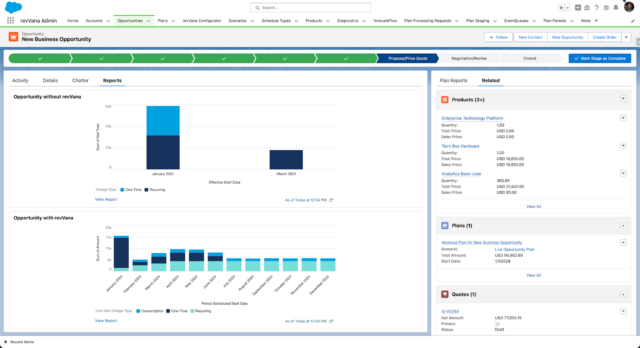
Forecast and Track Actuals: By integrating actual usage data into Salesforce, businesses can compare forecasts against actuals and targets, adjusting their strategies in real-time.
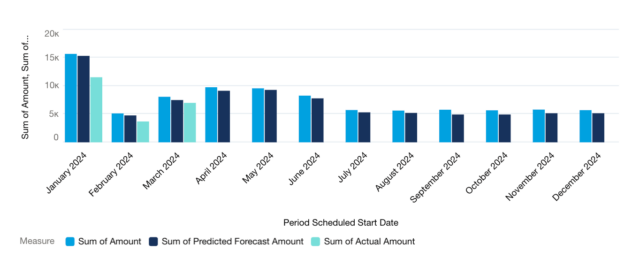
Engage Customers Proactively: With accurate forecasts, businesses can engage customers more effectively, addressing under or over-utilization before it impacts billing or service satisfaction.
As businesses increasingly move towards usage-based pricing models, improving consumption forecasting becomes essential. While the transition poses challenges, the adoption of integrated tools like revVana will enable businesses to forecast consumption easily. For more insights into transitioning to forecasting consumption and overcoming its challenges, schedule some time to talk with us today.
Ready to dive deeper?
Consumption Forecasting: How to do it
Published on Wednesday, May 1, 2024